Interiors · Bathroom
Bathing, Slowly
The bathroom has been over-engineered into a showroom. What actually improves it is warmth underfoot, daylight and one honest material.
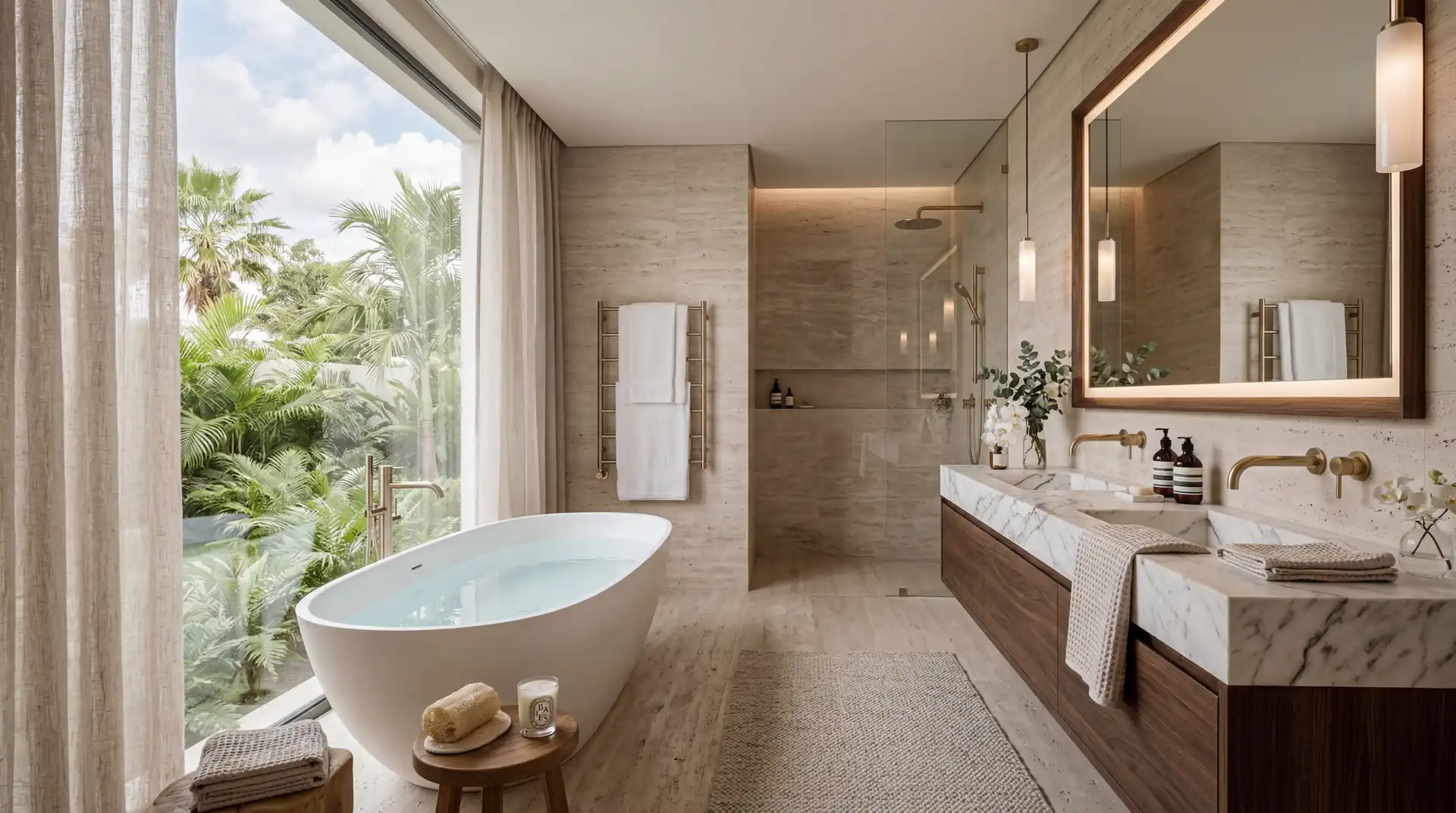

Bathrooms absorb money like no other room. Tiling, waterproofing, ventilation, underfloor heating, glass, brassware: the square metre rate is routinely three times that of a bedroom. And the things people love about the good ones cost almost none of it.
Daylight is the whole luxury
A bathroom with real daylight feels expensive whatever is in it. A bathroom without it feels like a facility, however deep the bath.
If the plan can give a bathroom an external wall, take it, even at the cost of a bedroom's window. If it cannot, borrow light: a rooflight, a clerestory above the door, a glazed panel to an adjacent room with obscured or reeded glass. Privacy is a matter of glass type and sill height, not of solid walls.
One material, generously used
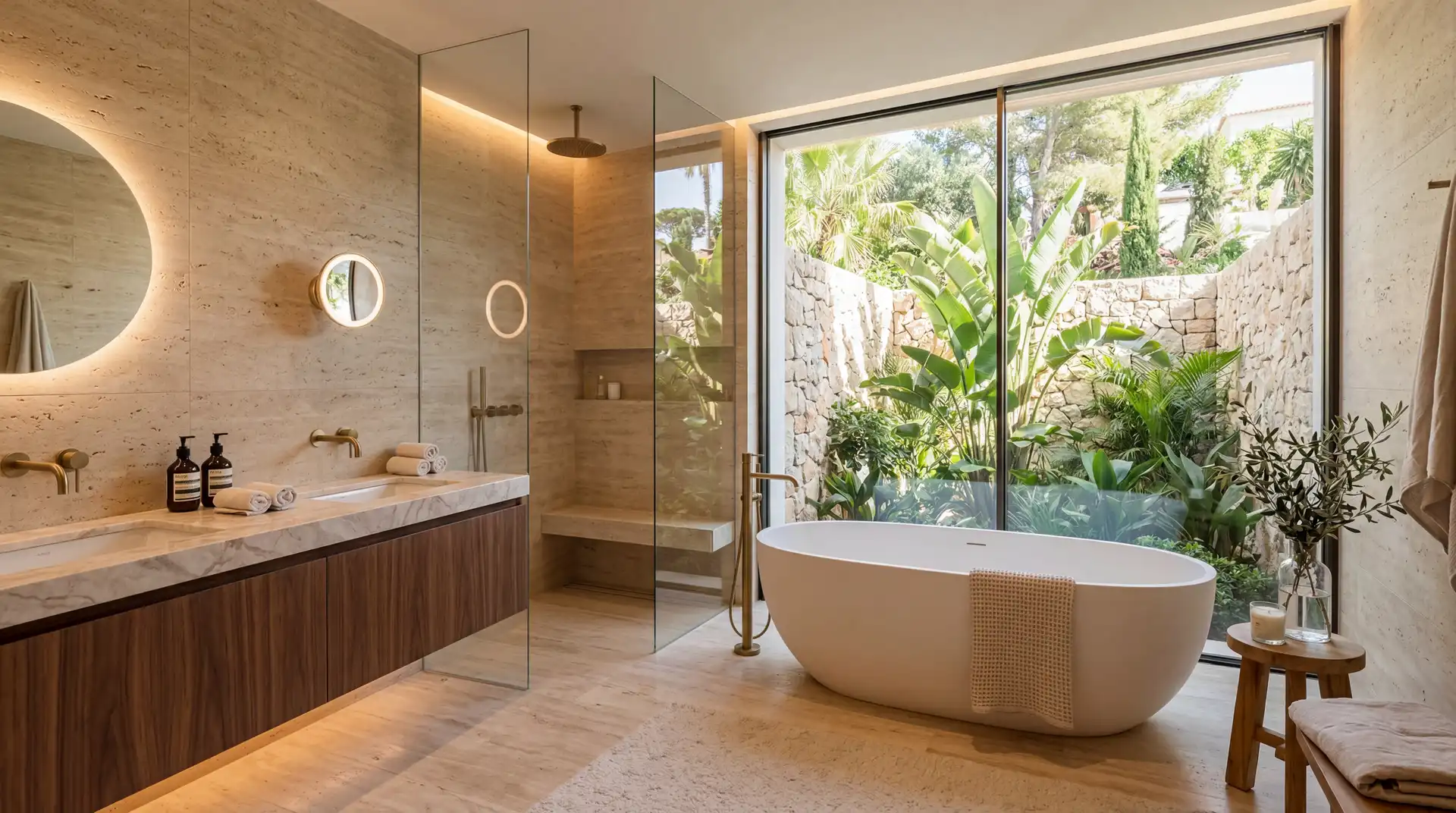
The most restful bathrooms use a single stone or plaster across floor, walls and often the basin surround, with a change only where function demands it. The visual noise in a poor bathroom comes from counting: floor tile, wall tile, border, niche, shower tray, screen frame, vanity, mirror frame. Eight materials in four square metres.
Reduce the count to three and the room settles: one surface, one timber, one metal. Everything else follows.
Tiles are joints. The fewer joints, the calmer the room, and the less there is to clean.
Marie Lubin, architect, Bordeaux
Warmth underfoot beats a heated towel rail
Underfloor heating in a bathroom is not a comfort extra, it is the mechanism that dries the room. A warm floor evaporates splash water within minutes, which keeps grout clean, prevents the sour smell of a room that never dries, and makes stone floors usable barefoot in February.
It also frees the wall that would have held a radiator, which in a small bathroom is often the difference between a plan that works and one that does not.
The wet room question
A fully open wet room looks superb and, in most houses, is a mistake. Without a screen, spray travels three metres, the whole room is wet after every shower, and the towels never dry. Underfloor heating helps and does not solve it.
The compromise that works: a single fixed glass panel, no door, a floor falling 1.5 per cent to a linear drain against the wall, and a bench. It gives the openness with none of the misery.
The ventilation nobody sizes properly
A family bathroom generates somewhere between ten and twenty litres of water vapour a day, and every one of those litres has to leave the building or it will condense on the coldest surface it can find, which is usually the corner of an external wall behind a towel.
A fan rated at fifteen air changes an hour, ducted in rigid pipe rather than flexible, with a humidity sensor and a fifteen minute run-on, solves it. Flexible duct with a sag in it does not: the sag fills with condensate and the fan is then pushing air through a water trap.
Where there is no external wall, the duct route becomes the design decision, and it needs to be drawn before the ceiling is closed. This is the single most common reason bathrooms in renovated flats smell faintly of damp within two years.
Where the money actually goes
For anyone budgeting, the split in a well-built bathroom is not what people expect. Roughly a third goes to labour and waterproofing that will never be seen. A quarter to the surfaces. A fifth to sanitaryware and brassware. The rest to heating, ventilation, glass and lighting.
Which means the two biggest levers are the ones nobody photographs: the number of times the plumbing has to move, and the complexity of the tiling. Keeping the pipework where it already is can save several thousand euros. Choosing one large-format surface instead of a mosaic can save the same again in labour.
Spend the difference on the shower valve and the ventilation, which are the two things you use every day and notice the moment they are wrong.
Storage nobody sees
Bathrooms need more storage than they get and less display than they are given. Open shelves with folded towels look wonderful in photographs and collect dust and steam in life.
One deep, tall cupboard with a door, plus a shallow niche formed in the wall build-up at shower height, covers almost everything. Then the surfaces stay empty, which is the actual luxury on offer here: a room with nothing on the counter.