Interiors · Surface
Plaster, Lime and the End of Flat White
The most consequential decision in a room is the finish of its largest surface, and for thirty years everybody has been making it by default.
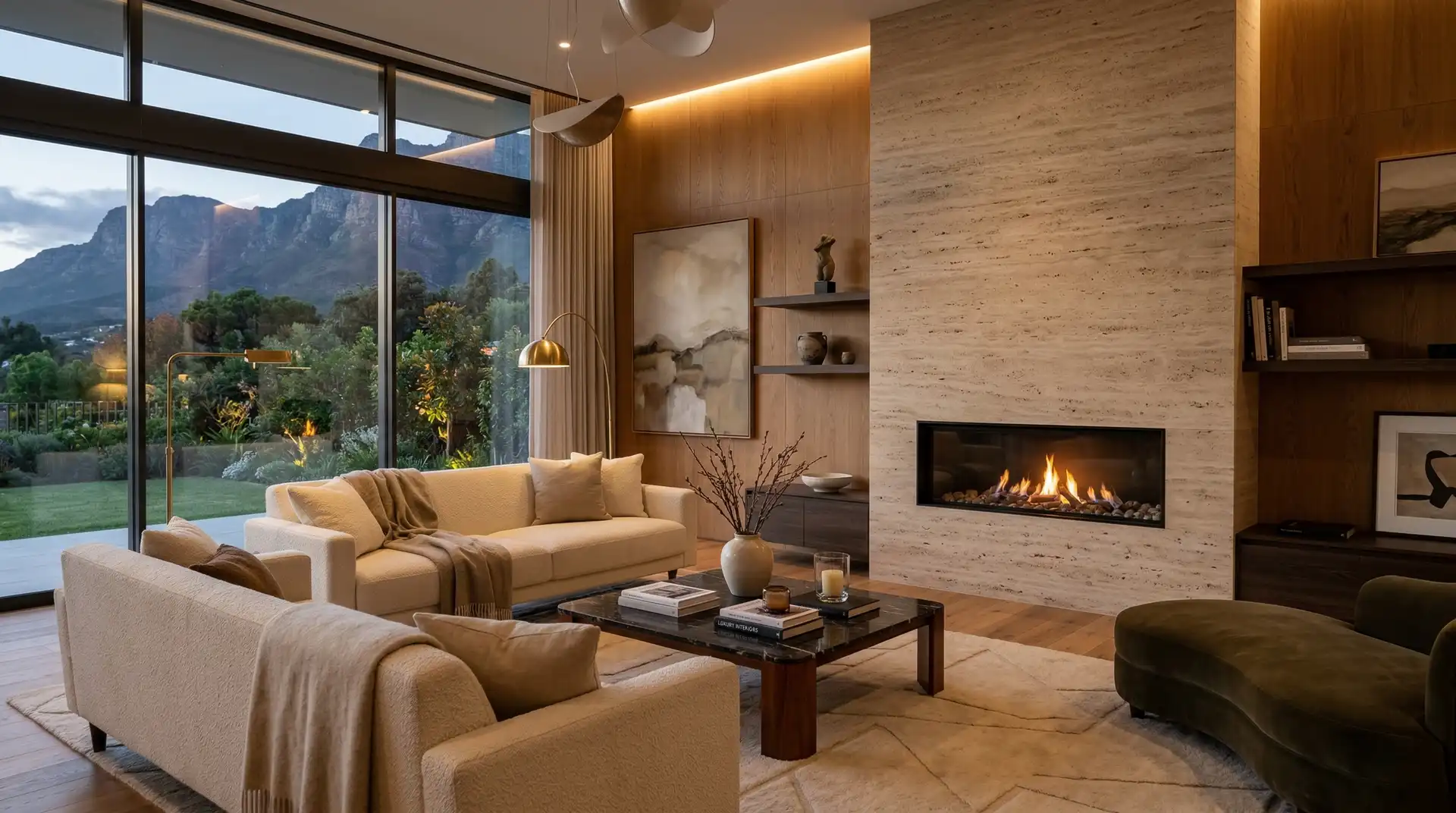

There are two ways to finish a wall. You can make it as flat, uniform and reflective as industry allows, or you can make it hold light unevenly. The first is what almost every house gets. The second is what almost every room people describe as beautiful actually has.
Why flat paint looks cheap in good light
Modern emulsion is engineered to be even. Its pigments and binders produce a uniform surface that returns light at a constant value across the whole plane. In flat northern light that is fine. In raking side light, particularly the low sun of a Mediterranean afternoon, it looks exactly like what it is: a plastic film over plasterboard.
Lime and clay finishes behave differently. Their surface is minutely irregular and slightly translucent, so light penetrates a fraction of a millimetre before scattering back. The wall appears to glow from within and to shift tone through the day. That effect is the entire reason people spend money on Venetian plaster and tadelakt, and it is available in far humbler finishes.

The four finishes worth knowing
Lime wash. Slaked lime, water, pigment. Cheapest of the hand finishes, chalky and mottled, breathable, and it goes on over almost anything with a mineral primer. Expect 25 to 45 euros a square metre applied. It marks, and the marks look like age rather than damage.
Clay plaster. Earth, sand, cellulose. Warm, slightly grainy, remarkable at buffering humidity, which makes it excellent in bedrooms and dubious in shower rooms. 60 to 110 euros a square metre.
Marmorino and stucco. Lime with marble dust, burnished in layers to a soft depth that reads like stone. This is the expensive one, 120 to 250 euros a square metre, and it is worth it on one wall rather than four.
Tadelakt. Lime polished with a stone and sealed with olive-oil soap, waterproof enough for a shower and seamless enough to make tiling look fussy. Requires a genuine specialist. Ask for addresses of work five years old.
Paint covers a wall. Plaster becomes one. The eye can tell, even when the mind cannot say why.
Youssef Ben Amar, plasterer, Fez
The ceiling question, again
If you take one idea from this: continue the wall finish across the ceiling. In a room with hand-finished walls and a bright white ceiling, the ceiling shouts. In a room where both are the same warm off-white, the corner dissolves and the space feels a size larger.
The trade is light. A tinted ceiling reflects perhaps ten per cent less into the room. In a bright climate, that is a gift rather than a cost.
How these finishes behave over ten years
The honest question is not how a wall looks on handover day, it is what happens after a decade of shoulders, dogs, furniture and a leaking radiator.
Lime wash ages best and repairs best. It chalks gently, takes marks that read as patina, and can be refreshed with a single coat by anybody with a brush and a Saturday. Clay plaster is softer and marks more easily, but a damaged patch can be re-wetted and worked back in almost invisibly. Marmorino holds up for decades and cannot be spot repaired: damage means redoing a whole wall to the nearest corner.
Modern emulsion, by contrast, does not age at all. It gets dirty, then it gets painted over. That is a maintenance cycle rather than a patina, and it is why a repainted room looks new rather than looked after.
The substrate decides more than the finish
Every disappointment with hand-applied finishes starts underneath. Lime and clay are thin, translucent and unforgiving: they show a badly taped plasterboard joint, a patch of different suction, a screw head, a shadow where the light rakes across a wall that is not flat.
Insist on three things before anyone opens a bucket. A skim coat over the whole surface rather than filled joints only. A mineral primer suited to the finish, applied to the entire wall so the suction is even. And a raking light test: a lamp held flat against the wall at night, which shows every undulation the finish will later reveal at four in the afternoon.
If the wall fails that test, no plaster in the world will rescue it.
What white actually means
The whites that work in warm climates carry yellow or red in the base. The whites that work in northern light carry a little grey or green to stop them going sour. A white chosen from a chart under fluorescent light in a shop will be wrong in both.
Take three samples home. Paint them large. Live with them for a week. Then choose the one that looks slightly too warm at noon, because that is the one that will look right at seven in the evening, which is when you actually live in the room.