Interiors · Bedroom
The Bedroom as a Dark Room
A bedroom has one job it cannot delegate. Everything else, the art, the bench, the reading chair, is negotiable.

Bedrooms get designed as though they are seen. In practice they are used in two conditions, neither of which favours decoration: fifteen minutes of low light at each end of the day, and complete darkness in between.
Design for those conditions and the room improves immediately.
Darkness is a specification
Real darkness needs three things, and curtains alone provide none of them. It needs an opaque fabric or blind. It needs the edges covered, because light entering around a blind is what wakes you, not light through it. And it needs the sources inside the room, standby LEDs and charger lights, eliminated or taped over.
The best solution remains the least fashionable: a blind in a recessed box, running in side channels, behind a curtain that softens the room. Total blackout, no light bleed, and the curtain does the acoustic and visual work.
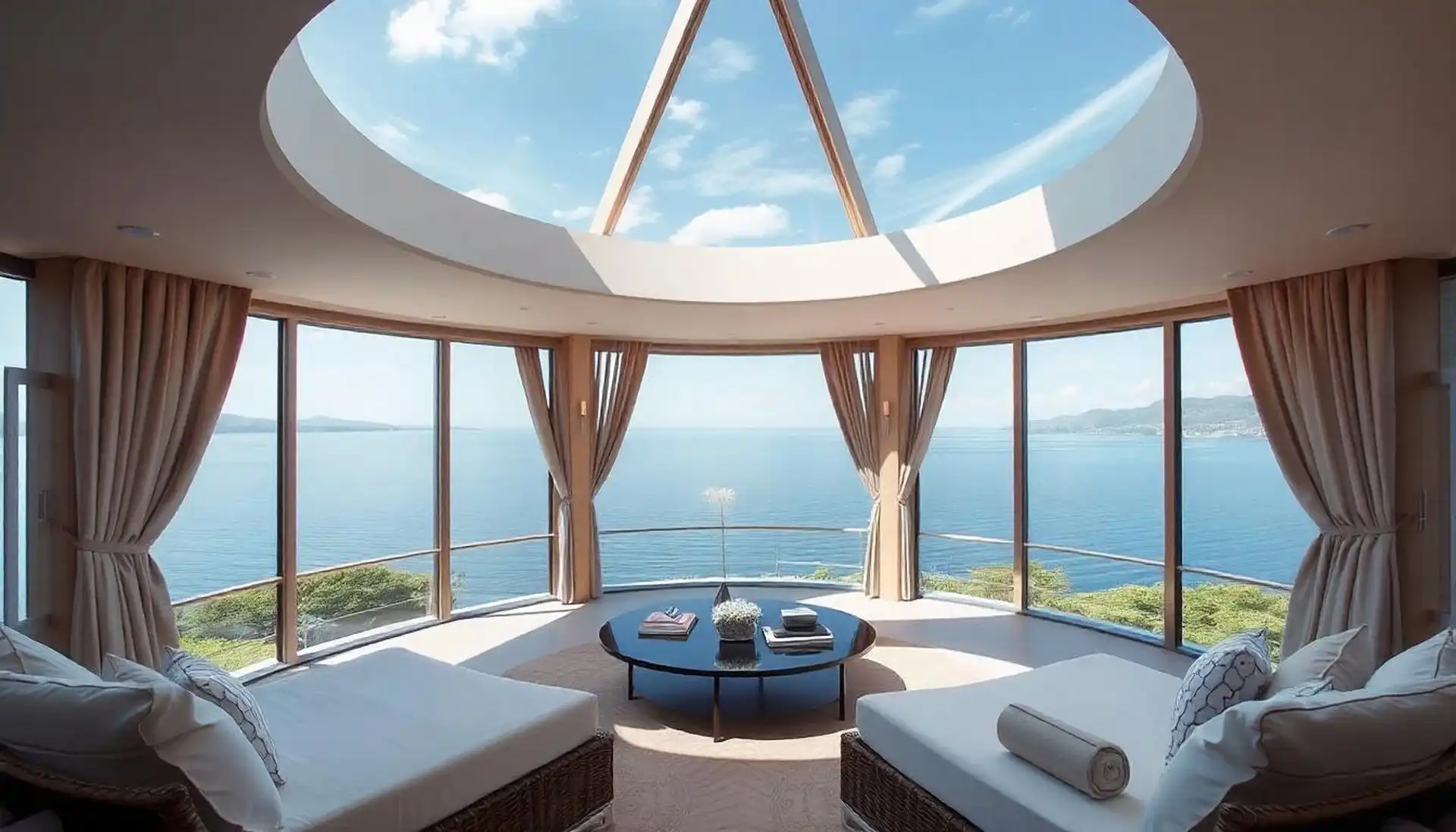
Temperature, then air
Sleep quality tracks temperature more closely than almost any other variable, and the target is cooler than most people set: 16 to 19 degrees. In a warm climate that argues for the bedroom on the ground floor, on the shaded side, with mass in the walls and a small opening rather than a glazed wall.
Then air. A bedroom with a closed door and two adults is a carbon dioxide chamber by four in the morning, at levels that measurably reduce sleep quality. A trickle vent, a cracked window or a ducted supply solves it. It is unglamorous and it matters more than the mattress.
Buy blackout, buy quiet, buy cool air. Then, if there is money left, buy a beautiful bed.
Dr Ines Haller, sleep researcher
The wall behind the bed
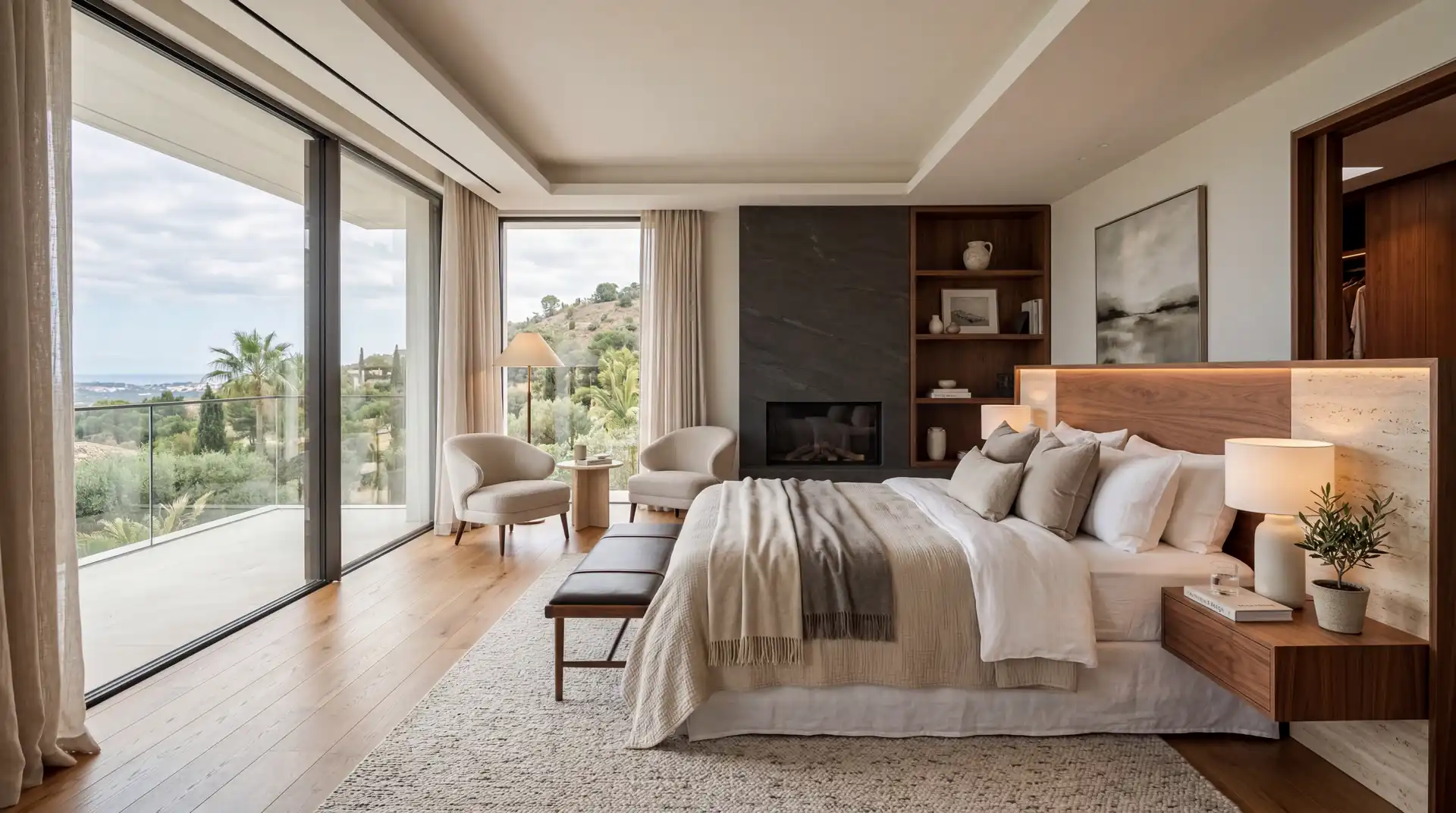
The headboard wall is the only wall in the house you never look at while using the room, and it is where almost everyone puts their effort. Panelled, upholstered, papered, lit.
Better: make it plain and quiet, and put the attention on the wall you do see, which is the one opposite. That is where a window, a piece of art or a view belongs, because it is the last thing you see at night and the first in the morning.
Storage, out of the room
A bedroom with wardrobes is a storage room with a bed in it. Where the plan allows, move clothes to a dressing area, a lobby or a run of cupboards outside the sleeping space. What is left is a room with a bed, two lamps and a chair, which sounds austere and feels like a hotel you did not want to leave.
Where the plan does not allow, at least get the doors right. Full height, flush, in the same finish as the wall, with no handles at eye level. The aim is that the storage disappears when you are lying down, which is the only view that counts.
Sound, and the wall you share
After light and temperature, noise is what decides sleep quality, and the walls of most modern houses are acoustically thin in exactly the places where it matters.
Three fixes, in order of return. Solid core doors with a seal at the head and jambs and a drop seal at the threshold, which alone removes most of the noise arriving from a corridor. Insulation in the internal stud walls around bedrooms, which costs almost nothing while the walls are open and cannot be added afterwards without demolition. And separated services: a soil pipe or a boiler run through a bedroom wall will be audible at three in the morning forever.
For street noise, the window is the weak point, and the answer is mass and seals rather than another pane. A well-sealed double unit outperforms a badly fitted triple every time.
What to do about the phone
Every study on sleep and screens says the same thing and nobody wants to hear it, so here is the design version rather than the moral one.
Put the charging point outside the room, in a hallway cupboard or on a shelf by the door, and buy an actual alarm clock. Fit the bedside sockets for lamps only. If a phone must be in the room, give it a drawer rather than a surface, because a face-down phone on a bedside table still gets picked up and a phone in a drawer usually does not.
This is not really a design problem, but it is the one intervention that improves a bedroom more than anything you can buy for it.
Light for the last hour
The single cheapest upgrade to any bedroom is warm, low, indirect light in the hour before sleep. Two lamps at bedside height with 2200 to 2700 kelvin bulbs, dimmed, and nothing overhead. The room becomes smaller, softer and browner, which is exactly what a body reading the light for sleep signals is looking for.
Fit a bright ceiling light too, on its own switch, for the ten minutes a year you look for an earring on the floor. Then never use it again.