Outdoor · Cooking
Outdoor Kitchens Beyond the Grill
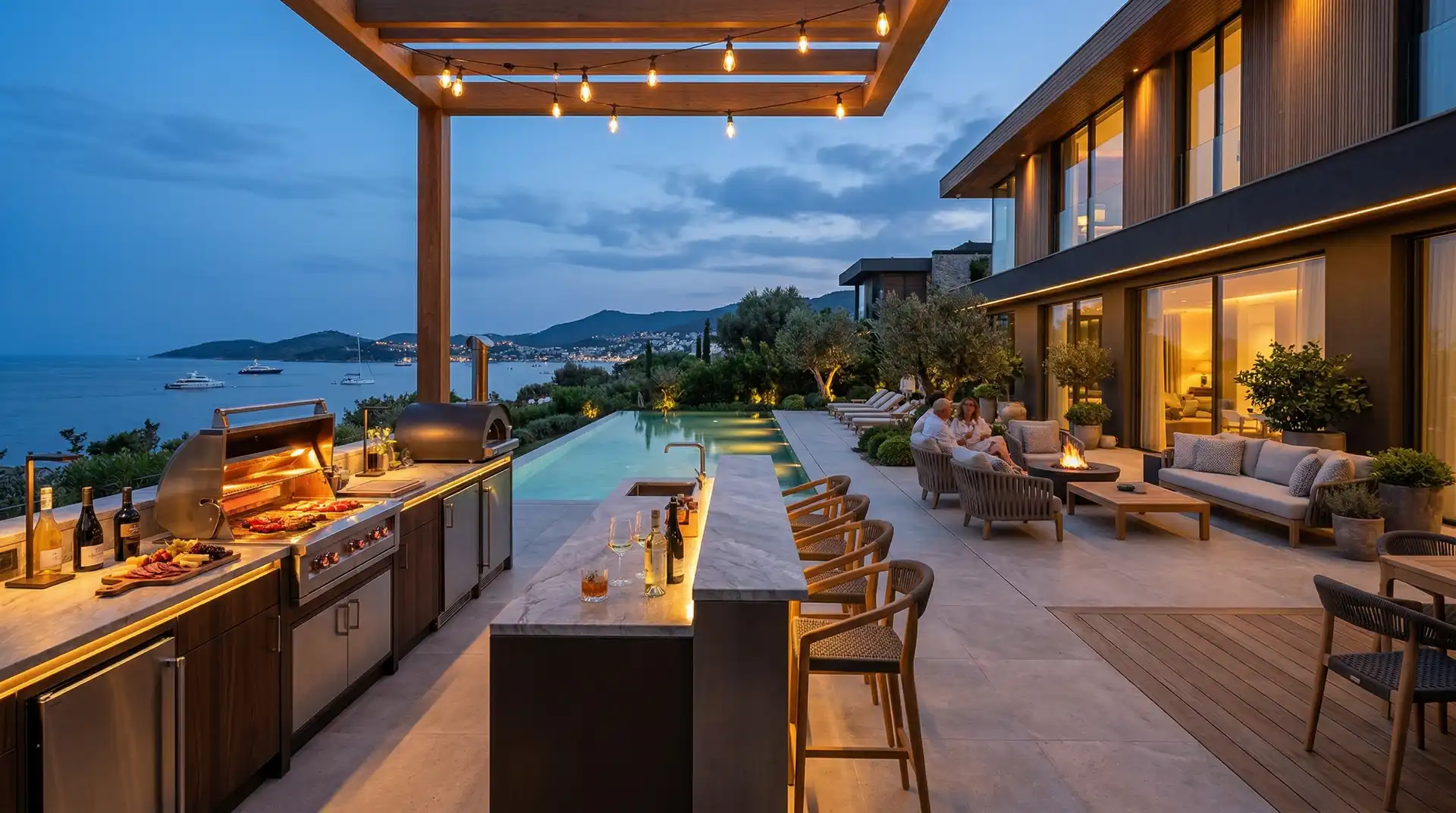
Most outdoor kitchens are a barbecue with cupboards. The ones that get used every day are planned like kitchens and drained like bathrooms.
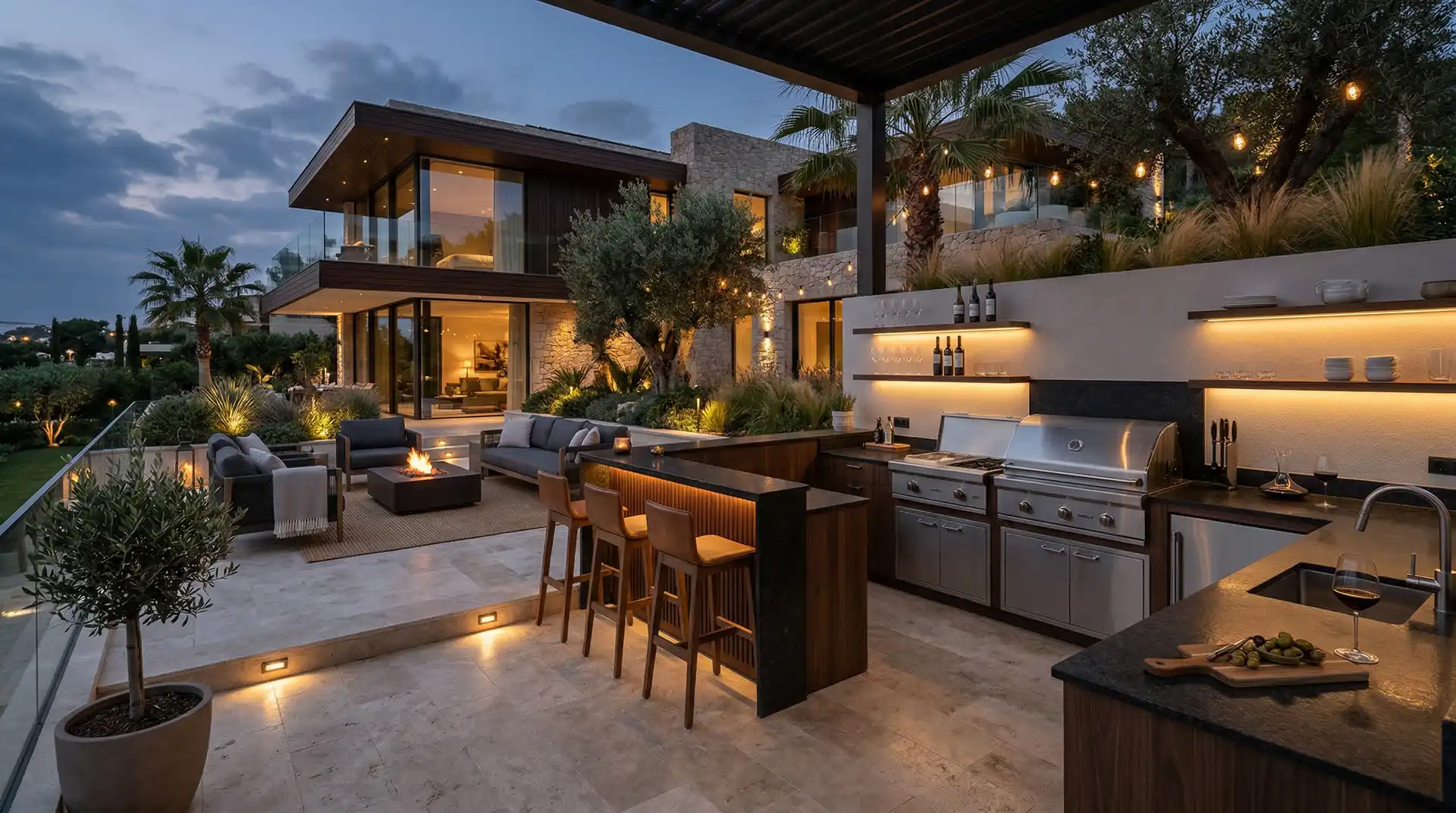

The outdoor kitchen has become the most over-sold element in residential building: six burners, a pizza oven, a refrigerated drawer, a green egg, and a bar with four stools nobody sits on because they are in the sun.
The ones that get used daily, for eight months a year, are simpler and better planned.
The test: can you cook a whole meal there?
That is the only question. If any part of the process, washing, chopping, plating, cleaning, requires walking indoors, the outdoor kitchen is a barbecue with cabinetry and it will be used on Sundays.
A whole-meal outdoor kitchen needs five things: a heat source, 1.2 metres of clear preparation surface beside it, a sink with hot water, cold storage within reach, and somewhere for waste. That is a shorter list than the showroom offers and a longer one than most installations deliver, because the sink and the hot water are almost always the items cut.
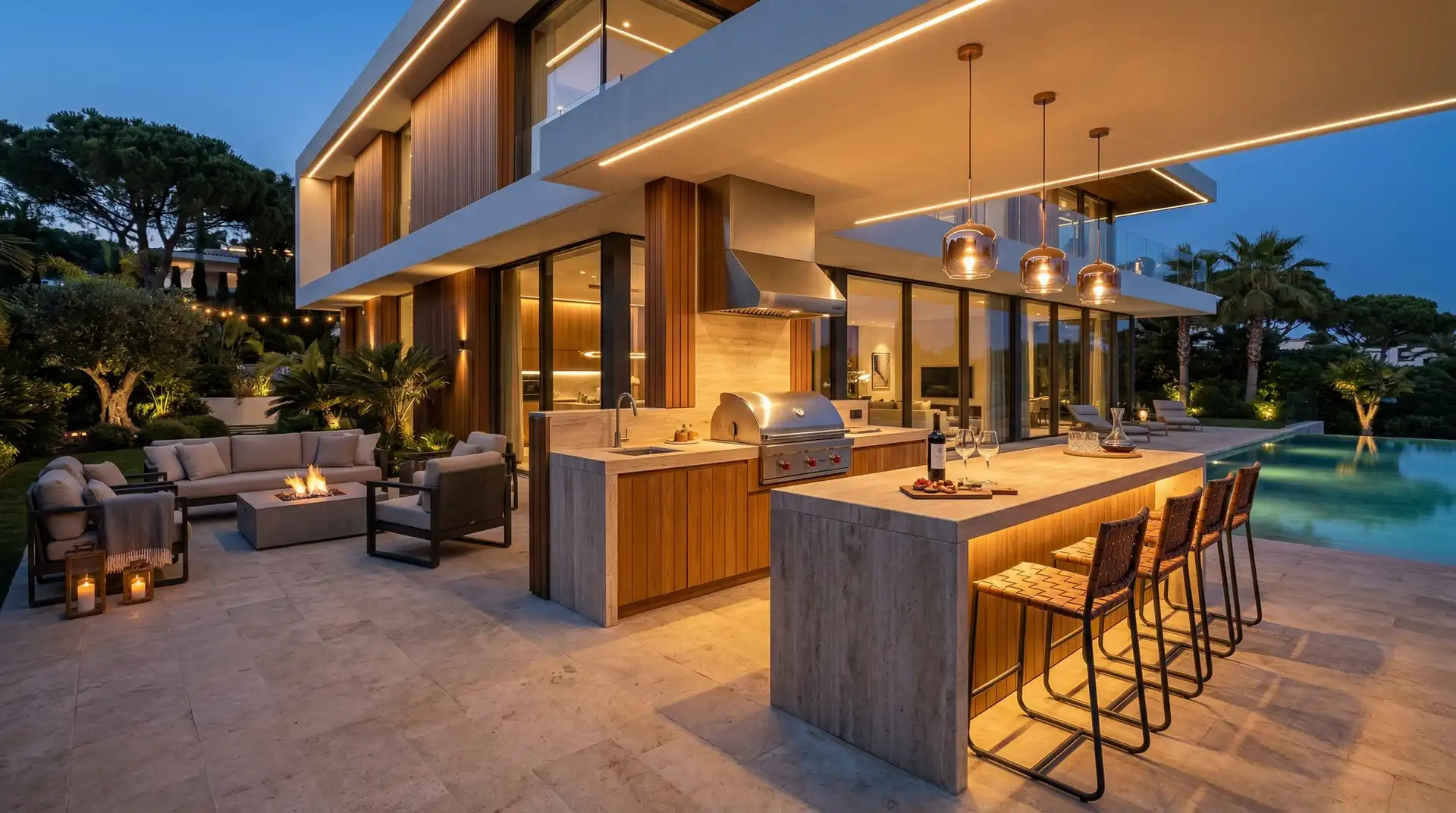
Position: near the door, out of the smoke
Two constraints fight each other. The outdoor kitchen wants to be close to the indoor one, sharing supply, storage and traffic. It also needs the grill smoke to blow away from both the dining table and the house.
Resolve it by placing the kitchen at the end of the terrace, on the downwind side, with the working face turned so the cook faces the guests, and the grill at the far end of the run. The cook stays in the conversation and the smoke leaves the party.
If the cook has their back to everyone, you have built an outdoor galley. The whole point was to be out there with the others.
Tomás Iriarte, chef, San Sebastián
Fuel, chosen honestly
Gas is convenient, controllable and produces food that tastes of gas. Charcoal is better food, more work and a forty minute lead time. Wood is best of all and demands attention you may not want on a Tuesday.
Most working outdoor kitchens end up with two: a gas grill for weeknights and a wood or charcoal hearth for the times when the cooking is the event. That is an honest answer, and it is cheaper than one enormous appliance trying to do both.
The pizza oven question
A wood-fired oven takes 60 to 90 minutes to reach temperature and holds it for hours. That makes it magnificent for a planned lunch and useless for a spontaneous supper.
Buy one if you like the ritual. Do not buy one because it looks good in the render, because it is heavy, permanent, expensive, and in most houses it is fired four times a year and then becomes an outdoor sculpture that stores rainwater.
Winter, which is when they die
Outdoor kitchens fail between November and March, and almost always for the same three reasons.
Water sitting in a worktop joint freezes and splits the stone. A pipe with no drain-down point bursts at the first hard frost. And a cabinet that traps moisture rots or corrodes from the inside, because it was built like an indoor unit with a weatherproof door on the front.
The remedies are all detail. Fall on every horizontal surface, a drain-down valve at the low point of the water supply with the isolation valve inside the house, ventilated carcasses with open backs, and appliance covers that actually get used. A cover that lives in a drawer next to the grill gets used. One that lives in the garage does not.
The counter arrangement that actually works
Three zones, left to right or right to left, exactly as indoors: cold and preparation, then heat, then a landing space for what comes off the grill.
The mistake in most installations is putting the grill in the middle of the run, which leaves two small useless surfaces on either side instead of one generous one. Put the heat at one end, keep at least 1.2 metres of continuous preparation surface beside it, and put the sink at the far end so wet work and hot work are not fighting for the same space.
If the run is short, drop the sink and keep the preparation surface. If it is long, add a second landing surface rather than another appliance. A metre of empty stone in the right place is worth more than any accessory in the catalogue.
The shade, last
An outdoor kitchen in full sun is a place you visit briefly. Under a solid roof, with light at the working face, it becomes the summer kitchen, which in a warm climate means the actual kitchen from May to October, with the indoor one reduced to a place where the dishwasher lives.
That is the whole ambition. Not another appliance outside, but the house moving out of doors for half the year.